AI Lead Automation for Small Business Works
AI lead automation for small business helps capture, qualify, and book faster - without adding staff or losing leads to slow follow-up.
A missed call at 2:17 p.m. should not cost a law firm a five-figure case. A web form submitted after hours should not sit untouched until morning while the prospect contacts three competitors. That is the real use case for ai lead automation for small business - not hype, not novelty, but plugging revenue leaks that happen every day.
For service businesses, lead generation usually is not the only problem. The bigger issue is what happens after the lead arrives. Someone submits a form, calls from a mobile search result, asks a question in chat, or responds to an ad. Then the handoff breaks. Response time drifts. Intake is inconsistent. Unqualified leads eat up staff time. Good leads go cold before anyone follows up.
AI can improve that, but only when it is applied to the full lead path, not bolted onto one corner of the website. If you run a dental practice, mortgage office, law firm, real estate team, or another service business with a high-value customer, automation has to do more than send a generic reply. It has to capture intent, qualify fit, route correctly, and move the prospect toward a booked appointment.
What ai lead automation for small business actually means
In practical terms, ai lead automation for small business is the use of automated systems and AI-assisted workflows to handle the first stages of lead management with speed and consistency. That can include website chat, instant SMS or email follow-up, intake questions, lead scoring, appointment booking, call handling, reactivation, and CRM updates.
The key word is system. A lot of owners buy one tool and assume they have automation. They add a chatbot, connect a calendar, or install a form plugin. That usually creates more software, not more revenue. If the tools do not share data and trigger the right next action, staff still end up doing manual cleanup.
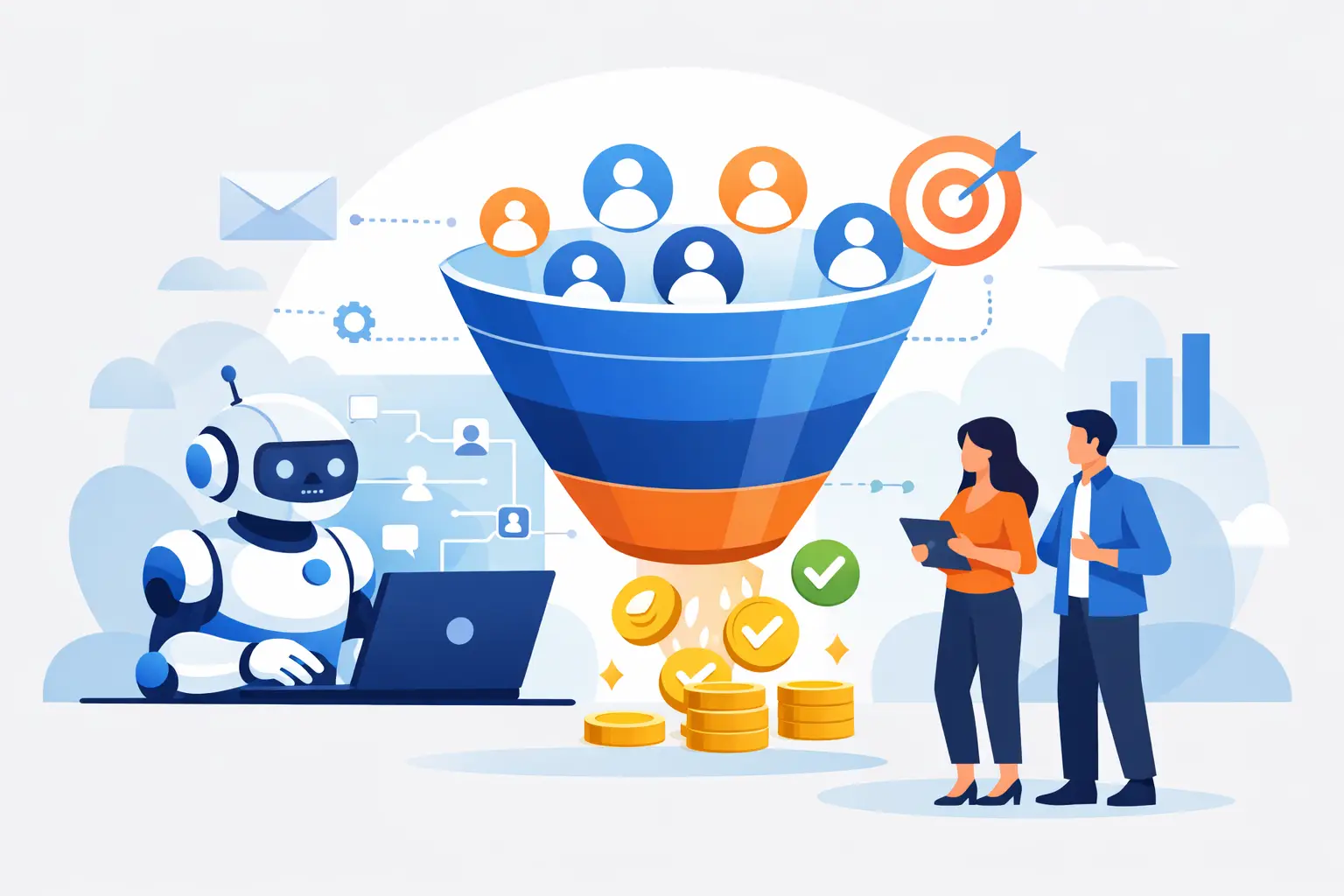
A working system behaves more like an operations layer than a marketing add-on. A new lead comes in from paid search. The system responds immediately, asks two or three qualification questions, identifies service type and urgency, offers the right booking flow, and logs the interaction for follow-up. If the lead goes quiet, the system nudges. If the lead is not a fit, it can still route the inquiry without wasting your front desk or intake team's time.
Why small businesses benefit more than larger ones
Large companies can survive inefficiency for longer. They have more staff, larger pipelines, and more margin for process failure. Small businesses do not. If your office misses five strong leads a month because nobody followed up fast enough, that is not a minor admin issue. It is lost revenue.
This is why automation tends to produce outsized results for smaller service businesses. It reduces the dependence on one person remembering to send the text, log the note, or call back at the right time. It also gives owners more control over consistency. Every prospect gets the same initial response standard, whether the inquiry arrives on Tuesday morning or Sunday night.
That does not mean every business needs the same level of automation. A solo operator with ten leads a month has a different need than a multi-location practice handling hundreds. But both can benefit from removing lag and variance from intake.
The workflows that matter most
Most of the value comes from a few core workflows, not from stacking every AI feature on the market.
The first is immediate lead response. Speed matters because intent decays fast. If someone searches for an urgent dentist, a real estate agent, or a mortgage option, they are usually comparing multiple providers at once. An automated reply within seconds or minutes is not a gimmick. It keeps the conversation alive long enough to move toward a booking.
The second is qualification. Not every lead deserves the same amount of staff attention. AI-assisted intake can ask basic questions up front: practice area, location, timeline, budget range, service type, insurance status, buying intent, or urgency. This does not replace human judgment, but it filters obvious mismatches early.
The third is booking. Too many businesses still treat scheduling like a manual back-and-forth. Strong lead automation should reduce friction here. If a prospect is qualified and ready, the path to booking should be immediate and clear.
The fourth is follow-up persistence. A lead that does not reply in the first five minutes is not dead. Many convert after the second or third touch. Automation helps maintain that consistency without relying on someone to remember every open thread.
Finally, there is reactivation. Most service businesses are sitting on old leads, unbooked consultations, and past inquiries that were never fully worked. AI-supported re-engagement can surface low-cost revenue from data you already own.
Where businesses get this wrong
The most common mistake is treating AI like a front-end trick. A smart-looking chatbot on a weak website does not fix poor traffic quality, unclear offers, or broken intake. If the fundamentals are weak, automation just processes bad inputs faster.
Another mistake is over-automating sensitive interactions. In legal, financial, and healthcare-adjacent services, trust matters. Prospects can tell when they are being pushed through a script. Automation should handle speed, structure, and handoff. It should not fake empathy where human contact is required.
There is also the data problem. If forms, ad platforms, CRM records, call logs, and calendars are disconnected, reporting becomes fiction. Owners think leads are being handled because a tool says "responded," while the real-world result is no-show appointments or poor-fit consultations. Engineering discipline matters here. The workflow has to be mapped end to end.
AI lead automation for small business by vertical
The use case changes by industry, which is why generic setups often underperform.
For dental practices, the priority is usually speed, insurance-related intake, service selection, and reducing front desk overload. A good system can separate emergency requests from routine cleaning inquiries and push patients toward the right booking path.
For law firms, the stakes are even higher. Intake quality matters as much as lead volume. A system should screen by matter type, jurisdiction, urgency, and fit before staff spend time reviewing weak inquiries.
For mortgage and lending businesses, timing and persistence are critical. Leads often compare lenders, pause mid-process, then re-enter the market weeks later. Automated follow-up and reactivation can materially improve conversion without increasing headcount.
For real estate teams, speed-to-lead and routing are everything. New buyer and seller leads need immediate response, smart distribution, and ongoing nurture. Delays are expensive because the prospect usually has multiple options within minutes.
This is where a specialized partner tends to outperform a generic agency. The workflow needs to reflect how revenue is actually won in the category, not just how forms are collected on a website.
What to measure beyond lead volume
If you want to know whether automation is working, do not stop at lead count. More leads can still mean more waste.
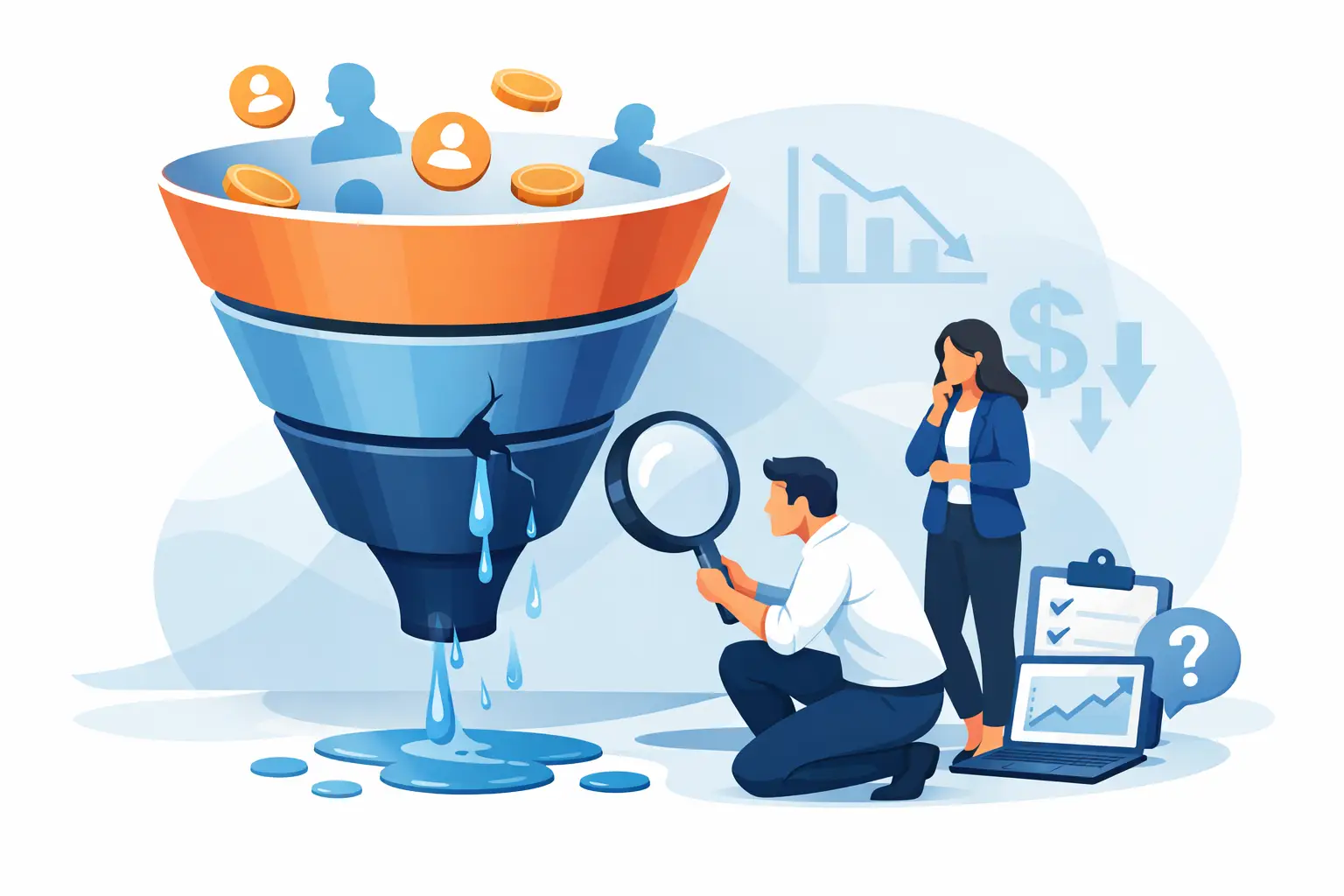
The better metrics are response time, qualification rate, booked appointment rate, show rate, cost per qualified lead, and close rate by source. You also want visibility into where leads stall. Are they failing at first contact, at intake, at booking, or after the appointment is set?
This is where many small businesses get frustrated with agencies. They receive traffic reports and ad metrics but not operational metrics tied to revenue. That is backwards. The point of automation is not prettier dashboards. It is to create a more reliable path from inquiry to booked business.
Build vs buy is not a simple decision
Some businesses can assemble these systems internally using off-the-shelf tools. If you have a technically capable operator in-house, a clear process, and enough time to manage integrations, that can work.
But most service businesses do not fail because tools are unavailable. They fail because the stack becomes fragmented. The website team does one thing, the ads team does another, and the CRM setup is owned by nobody. Then every issue turns into a handoff problem.
Buying a unified system often costs more upfront than adding another standalone tool, but it usually costs less than months of missed leads, broken automations, and staff workarounds. Less theatre, more execution.
That is the practical case for a company like Rivelo. The value is not just the AI feature set. It is the engineered system behind it - site, intake, ad flow, qualification, booking, and reporting working together instead of fighting each other.
The standard to aim for
A small business does not need futuristic automation. It needs a dependable lead handling system that responds fast, asks the right questions, books the right prospects, and gives staff a clean handoff.
If your current process still depends on someone checking a shared inbox, listening to voicemails between appointments, or manually texting every new lead, you do not have a lead generation problem. You have an operations problem with a revenue consequence.
The good news is that this is fixable. Start with the leak, not the trend. Find where leads are slowing down, getting lost, or being mishandled, then build automation around that pressure point. The businesses that win with AI are usually not the ones using the most tools. They are the ones running the clearest system.