Google Business Profile Audit That Stops Lost Leads
A Google Business Profile audit finds the local search and conversion leaks costing calls, bookings, and qualified leads - then puts fixes in order fast.
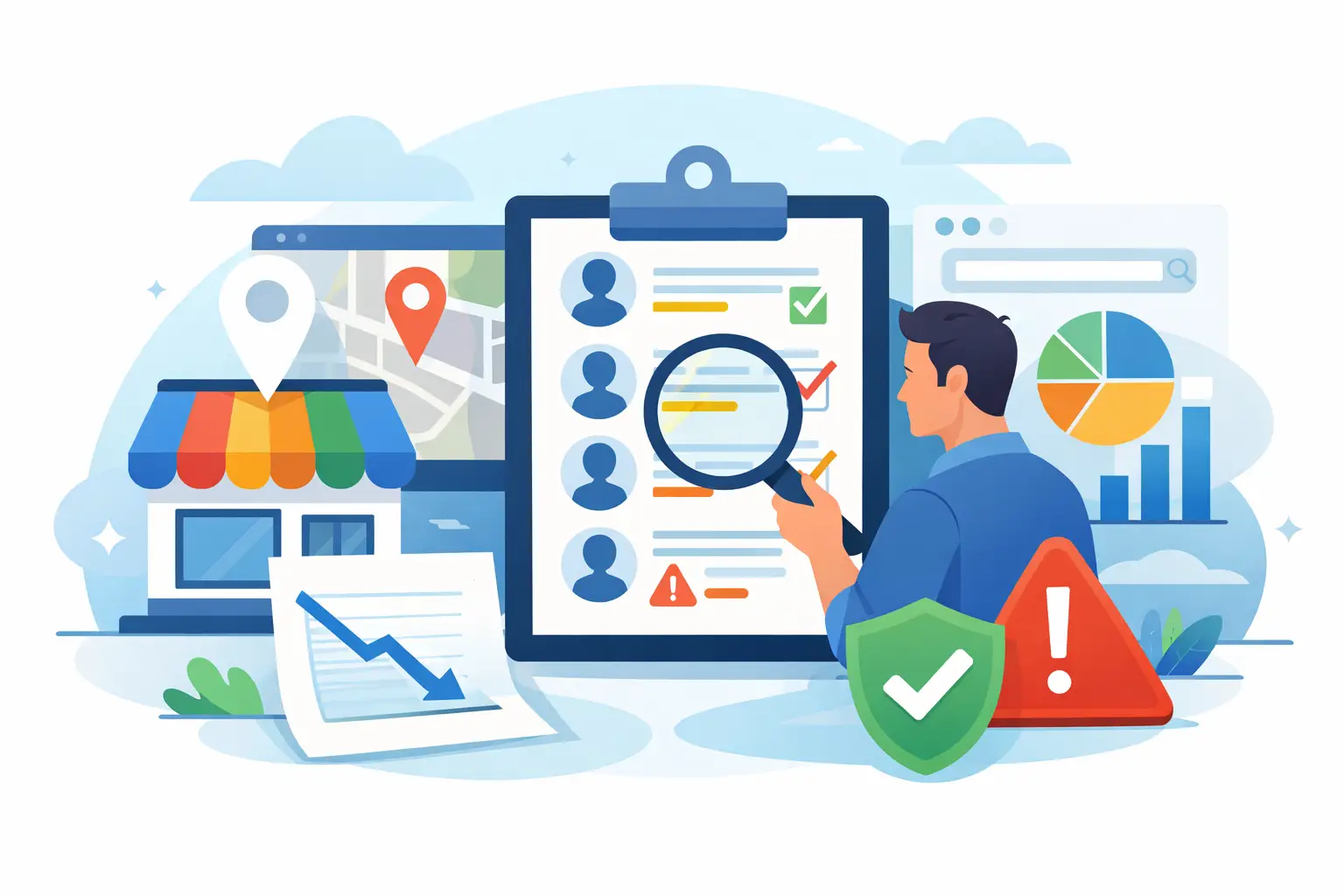
A prospect searches for an emergency dentist, a real estate agent, or a mortgage broker near them. They see your Google listing before they see your website. If the hours are wrong, the category is vague, the phone number fails, or recent reviews go unanswered, that prospect moves on. A Google Business Profile audit is not a cosmetic marketing exercise. It is an intake-system inspection for one of your highest-intent lead sources.
For service businesses, the goal is not to make a profile look busy. The goal is to make it accurate, credible, easy to act on, and measurable. Rankings matter, but a profile that earns visibility and loses the call is still underperforming.
What a Google Business Profile audit should uncover
A useful audit answers two commercial questions: can local customers find the business for the services that generate revenue, and can they contact or book it without friction? Everything else is secondary.
This requires more than checking whether the profile is verified. A proper review examines the profile, the local search results around it, the website destination, customer feedback, and the handoff into your team. A law firm may receive calls for the wrong practice area. A dental practice may show a generic booking link that creates unnecessary friction. A real estate team may have agent profiles competing with the main team listing. These are operational problems, not just SEO problems.
The audit should also distinguish between a ranking issue and a conversion issue. If impressions are low, relevance, proximity, competition, and profile completeness deserve attention. If impressions are healthy but calls and website visits are weak, the profile offer, trust signals, CTA, or destination page may be the actual leak. Treating every problem as "more SEO" wastes time and budget.
Start the Google Business Profile audit with control and accuracy
Before optimizing anything, confirm who owns the asset. Too many businesses discover that a former employee, web vendor, or agency controls their profile only when they need to change hours or respond to a public issue. The business owner should have primary ownership, with appropriate internal and partner access assigned separately. Document it.
Then validate the core business data against the website, directories, signage, and customer-facing materials. Check the legal business name, address or service area, primary phone number, website URL, regular hours, holiday hours, and appointment links. One inconsistent field will not automatically destroy local visibility, but a pattern of conflicting information weakens trust for both customers and platforms.
Be disciplined about the business name. Adding cities, services, or promotional claims to a name field when they are not part of the real-world business name is a common shortcut. It can create short-term visibility, but it also creates suspension risk and makes the profile harder to defend if competitors report it. Engineering DNA, not template DNA, means building on rules that hold up under scrutiny.
Choose categories based on revenue, not vanity
The primary category is one of the strongest relevance signals available in the profile. It should describe the central business, not the broadest possible market or the service you would like to sell more of. A family dentist should not select an unrelated cosmetic category just because the phrase sounds more valuable. A mortgage company should select the category that reflects its actual lending operation, then use secondary categories only where they are genuinely supported.
Review category choices against the services you want to rank for, but do not expect categories alone to create demand. A personal injury attorney with the right category still needs a clear practice-area page, credible reviews, and location relevance. Categories set context. They do not replace the rest of the local growth system.
Audit the proof a local buyer needs before contacting you
Local search is a trust decision made quickly. Prospects compare a small set of listings, often from a phone, and look for reasons to remove risk. Your profile must provide useful proof without turning into a keyword dump.
Review the business description for clarity. It should state what the business does, whom it serves, and why a prospect should take the next step. It is not a place for exaggerated claims, a wall of service keywords, or generic language about being "the best." A stronger approach is specific: explain the service model, geographic coverage, credentials where appropriate, and the action a prospect can take.
Photos deserve the same scrutiny. Stock imagery may support a polished brand, but it cannot replace real evidence of the practice, office, team, vehicles, properties, or process. For a dental office, show the reception area, treatment rooms, and team. For a law firm, professional team and office photos can reduce uncertainty. For a real estate group, current agent photos and market-facing work often do more than a slideshow of generic homes.
Check each available profile field, including services, products where relevant, attributes, accessibility details, and service areas. Availability varies by business type and region, so the right action depends on what Google presents in the dashboard. Fill out fields that help a customer decide. Do not add fields simply because they exist.
Test conversion paths like a customer would
A profile can be complete and still bleed leads. The audit should test every path from search to contact on a mobile device: call, directions, website visit, appointment, messaging if enabled, and any lead form or booking flow.
The website URL should not always point to the homepage. For a multi-location business, each location should generally send visitors to a location-specific page with matching name, address, phone number, hours, services, and a clear action. A generic homepage forces the customer to search again. That extra step costs conversions.
Booking links need special attention. If a customer clicks "Book" and encounters a slow page, unavailable calendar, duplicate form, or unclear confirmation, the profile has created demand your operation cannot capture. For time-sensitive services, test response expectations as well. An AI chat tool or intake workflow can help, but only if it routes requests correctly and gives the customer a reliable next step.
Use call tracking carefully. A tracked number can provide valuable attribution, but it must preserve consistent business information and route to the right team. The point is not to collect another dashboard metric. The point is to identify whether calls are answered, qualified, booked, and converted.
Review reputation as conversion infrastructure
Review quantity matters, but review quality, recency, response behavior, and relevance matter too. A profile with hundreds of old reviews can look less active than a competitor receiving a steady flow of detailed recent feedback.
During the audit, examine the last several months of reviews. Look for recurring language about responsiveness, wait times, staff professionalism, results, billing, or communication. These patterns are not just reputation data. They are operational feedback in public view. If clients repeatedly mention delayed callbacks, more review requests will not solve the problem.
Responses should be timely, professional, and privacy-conscious. This is particularly important for healthcare, legal, and lending businesses. Do not confirm sensitive details or argue facts in public. A concise response that acknowledges the concern and offers an offline resolution is often the correct move. Positive reviews also deserve responses, but avoid copy-paste replies that signal automation without care.
Never buy reviews, gate feedback, or pressure employees and customers to post scripted language. Those tactics create platform risk and undermine the credibility you are trying to build. A better system requests feedback consistently after a legitimate service milestone and gives the team a process for resolving unhappy customers before small issues become recurring public problems.
Compare the profile against the local search market
An audit without competitor context is incomplete. Search the core service terms from the actual service area and record which businesses appear in the local results. Compare primary categories, review velocity, ratings, photos, service positioning, booking options, and the quality of the pages behind their website links.
Do not copy a competitor's violations or assume their position is permanent. Some listings rank because they are closer to the searcher, have a stronger review history, or have years of brand recognition. Others may be benefiting from inaccurate names, duplicate listings, or category misuse that could eventually be corrected. The practical question is where your business has a legitimate advantage and where the gap is structural.
For multi-location operators, review duplicate and competing profiles closely. Duplicate listings split review equity and confuse customers. Separate practitioner profiles can be valid in certain industries, but they need an intentional structure so they do not cannibalize the main brand listing. This is one area where a casual setup often creates expensive cleanup later.
Turn findings into a 30-day repair plan
A completed audit should end with priorities, owners, and measurable checks. Do not hand the team a 40-item checklist and call it strategy. Fix the issues that can immediately stop lost leads first: ownership access, wrong contact data, broken links, incorrect hours, duplicate listings, missing primary category, and unanswered high-risk reviews.
Next, improve conversion evidence through real photos, complete services, a stronger description, relevant attributes, and location-specific landing pages. Then build the ongoing system: review requests, response standards, post cadence where useful, lead tracking, missed-call handling, and monthly reporting tied to calls, bookings, and qualified leads.
Expect some changes to take time. Google may review edits, local visibility can fluctuate, and proximity will always influence results. The objective is not a theatrical promise of instant map-pack dominance. It is a profile that accurately represents the business, earns more qualified actions, and connects those actions to a dependable follow-up process.
Your Google profile is often the first point where local demand meets your operation. Treat it with the same discipline you would apply to a front desk, intake team, or sales pipeline. The best audit does not create more activity for its own sake. It removes the reasons ready-to-buy customers fail to reach you.