How to Improve Website Conversion Without Guesswork
Learn how to improve website conversion with clearer offers, faster intake, disciplined follow-up, and measurement tied to booked revenue for growth teams.

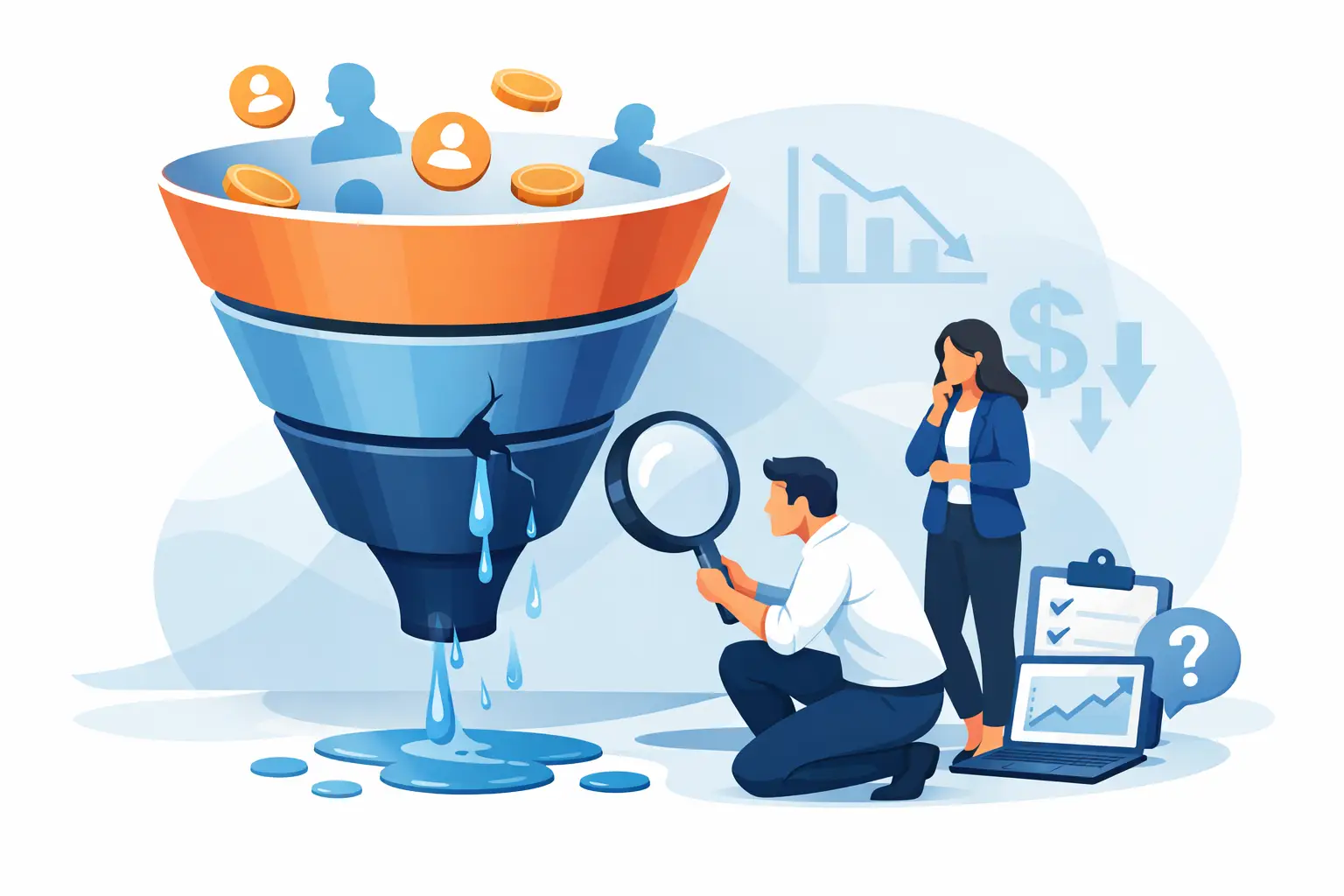
A visitor lands on your firm’s website, checks your services, and leaves without calling, booking, or submitting a form. That is not a traffic problem. It is a revenue leak. Knowing how to improve website conversion starts with treating the site as an intake system, not a digital brochure.
For service businesses, conversion is rarely about a clever button color or a more animated homepage. It is about whether the right prospect can quickly answer three questions: Is this business right for my problem? Can I trust it? What happens if I contact them now?
A dental patient wants to know whether they can get an appointment. A legal client wants confidence that their case fits the firm’s practice area. A mortgage borrower needs a clear path to a pre-approval conversation. If the website makes those answers difficult to find, paid clicks, local SEO, and referrals all produce less than they should.
How to improve website conversion by fixing the offer first
Many low-converting websites have a design problem only on the surface. Underneath, they have an offer problem. Their headline says something broad such as “quality service you can trust,” which could describe nearly any business in the market. Visitors do not need another slogan. They need fast orientation.
Your primary message should identify who you help, what outcome you help them pursue, and what the next action is. A family law firm may lead with a specific type of case and a confidential consultation path. A real estate team may lead with neighborhood expertise, current inventory access, or a valuation process. A dental practice may lead with new-patient availability, emergency care, or a defined treatment category.
Specificity can reduce irrelevant inquiries, and that is usually a gain rather than a loss. More form fills are not automatically better. A website that produces fewer but better-qualified calls is doing its job.
The offer must also match the source of traffic. Someone clicking a Google ad for emergency dentistry has different intent from someone reading an educational blog post about implants. Sending both users to the same general homepage forces them to do unnecessary work. Use focused service pages and campaign landing pages when the commercial stakes justify them.
Remove friction from the path to contact
A service website should make contacting the business feel immediate, controlled, and low-risk. The next step should be visible without hunting through menus, and it should remain available as visitors move through high-intent pages.
That does not mean every page needs five competing calls to action. Too many choices create hesitation. Select one primary action based on your operating model: book a consultation, request an estimate, call now, or begin a pre-qualification. Support it with one secondary option for visitors who are not ready for the main commitment.
The contact experience also needs to respect the visitor’s time. Long forms are a common conversion failure because businesses try to collect every detail before a conversation has begun. Ask only for what is required to route and respond to the lead: name, contact method, service need, location if relevant, and one qualifying question.
There are exceptions. A complex legal matter, commercial lending request, or major renovation project may need deeper intake before a meeting is useful. In those cases, make the reason clear. Explain that the information helps the team prepare, confirm fit, or assign the right specialist. Friction is easier to accept when it has a visible purpose.
Fast mobile performance matters just as much. Most local-service prospects will encounter your business from a phone, often between meetings or while dealing with an immediate problem. A slow page, a broken booking widget, or a form that is awkward on a small screen signals operational risk. Engineering DNA, not template DNA, shows up in these details.
Build trust where the decision happens
Trust should not live on a single testimonials page that few visitors see. It belongs beside claims, forms, service descriptions, and booking prompts, where visitors are deciding whether to act.
Use evidence that matches the decision. For a law firm, that may mean practice focus, attorney credentials, process clarity, and carefully framed case experience. For a mortgage business, it may include licensing information, lender relationships where appropriate, and an explanation of how the pre-approval process works. For a real estate team, local transaction experience, current market knowledge, and a straightforward seller or buyer process carry more weight than generic praise.
Reviews help, but only when they are credible and relevant. A wall of anonymous five-star quotes is weak proof. Recent reviews that reference the type of service, responsiveness, or outcome a prospect cares about are more useful. The goal is not to manufacture social proof. It is to make existing proof easy to find at the moment it matters.
Pricing is another trust variable. You do not always need to publish full pricing, especially for regulated, custom, or high-ticket services. But hiding every commercial detail can attract poor-fit leads and create unnecessary uncertainty. Consider sharing starting ranges, consultation terms, financing availability, or a clear explanation of what affects cost. Transparency filters better and makes sales conversations more productive.
Treat response time as part of website conversion
A submitted form is not a conversion if no one responds until the next business day. The website, CRM, phone system, calendar, and follow-up workflow must work as one operating system.
This is where many businesses lose expensive leads. Marketing generates demand, but intake is fragmented. A receptionist is busy. An inbox is unmonitored. A lead is assigned manually and forgotten. The prospect contacts the next provider before your team has replied.
Set clear service levels for inbound leads. For example, a new inquiry can receive an immediate confirmation, a routing question if needed, and a booking option. During business hours, a qualified request should reach a human quickly. Outside business hours, automation can acknowledge the inquiry, collect basic context, and preserve momentum until the team is available.
AI chat can help when it answers practical questions, identifies intent, and moves prospects toward booking. It becomes counterproductive when it blocks access to a person, invents answers, or creates a long conversational maze. Use automation to reduce administrative delay, not to impersonate expertise or avoid customer service.
The same discipline applies after an abandoned form or missed call. A structured follow-up sequence can recover demand that would otherwise disappear. Keep the messages useful and proportionate. High-consideration services may justify multiple touchpoints; a simple appointment request may need one fast confirmation and a direct scheduling route.
Measure conversion quality, not just conversion rate
A conversion rate without context can reward the wrong behavior. A landing page may generate a high number of low-quality inquiries because its message is vague, its offer is too broad, or its form has no qualification. Another page may convert fewer visitors while producing more booked consultations and signed clients.
Track the full path from source to revenue. At minimum, know which channels and pages produce calls, form submissions, booked appointments, qualified opportunities, and closed business. If your sales cycle is longer, use leading indicators such as completed intake, consultation attendance, or document submission alongside closed revenue.
Review recordings, form entries, chat transcripts, and sales notes regularly. They reveal language your market actually uses, objections that the site fails to answer, and qualification gaps that analytics alone cannot show. If prospects repeatedly ask whether you serve a particular area, offer a certain financing option, or handle a specific case type, the website may be burying critical information.
Test one meaningful variable at a time. Rewrite a weak service-page promise. Reduce a form from eight fields to four. Replace a generic contact button with a specific booking action. Add proof beside a high-intent call to action. Then measure whether qualified outcomes change. Less theater, more execution.
Make conversion work an operating discipline
The strongest websites are maintained like revenue infrastructure. Their offers evolve as services change. Their forms reflect what the intake team actually needs. Their booking flow respects staff capacity. Their reporting connects marketing activity to commercial outcomes.
Do not begin by redesigning everything. Start with the pages that receive the most qualified traffic, the highest-value services, and the handoffs where leads currently stall. Fixing a single unclear offer or delayed response workflow can matter more than months of cosmetic revisions.
A website earns its place in the business when it makes the next right action easy for a qualified prospect and easy for your team to fulfill. Build for that standard, then keep improving it as real customer behavior gives you better evidence.