Marketing Automation That Produces Booked Business
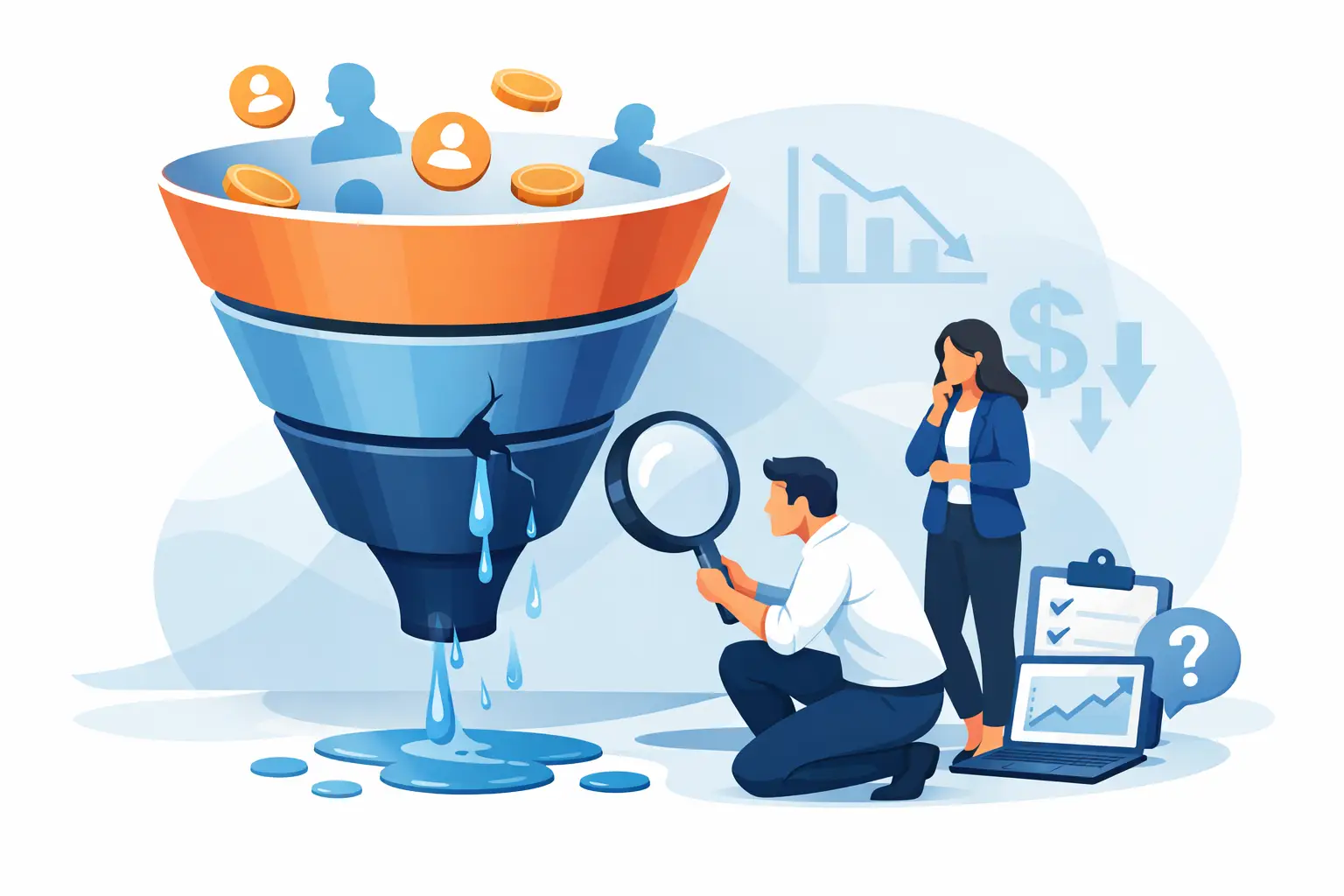
Marketing automation turns every inquiry into a faster, more consistent path to booking while exposing intake gaps that cost service firms revenue loss.

A prospective client finds your firm after business hours, submits a form, and receives no response until the next morning. By then, they have contacted three competitors. That is not a traffic problem. It is an intake failure.
Marketing automation exists to prevent this kind of revenue leak. Done well, it connects the moments between attention and action: the form submission, missed call, qualification question, appointment booking, reminder, review request, and reactivation message. Done poorly, it produces generic emails, duplicate records, and a false sense that the business has a system.
For service businesses, the standard should be simple: automation must make it easier for qualified people to become booked appointments, and easier for your team to act on the right opportunities. Less theater, more execution.
What Marketing Automation Should Actually Do
Many businesses think of marketing automation as email campaigns scheduled weeks in advance. Email is one channel, not the system. The useful version is an operating layer that responds to customer behavior and routes work to the right person at the right time.
A dental practice may need an immediate response to a new patient request, insurance and service questions before booking, appointment reminders, and an overdue recall sequence. A law firm may need to screen out cases outside its practice area while making sure an urgent, high-value inquiry reaches intake without delay. A mortgage broker may need to separate purchase, refinance, and renewal leads, collect basic financial information, and follow up before the prospect starts comparing rates elsewhere.
The workflow changes by industry. The principle does not: every inquiry should have a defined next step, an owner, and a time limit.
Automation is most valuable where manual follow-up is inconsistent. That includes missed calls, web forms, live chat, lead ads, referral inquiries, appointment no-shows, old database contacts, and review requests after a completed service. These are not isolated marketing tasks. They are connected points in the revenue process.
Start With the Revenue Leak, Not the Software
Buying a platform before defining the problem is how businesses end up paying for features nobody uses. Start by tracing a real lead from first contact to booked business. Review the last 20 inquiries, not the version of the process everyone thinks is happening.
Ask practical questions. How quickly did each lead receive a response? Did the inquiry reach the right team member? Was the source recorded? Did anyone follow up after the first unanswered call? Was the prospect asked to book at the point of highest intent? Can you see why leads did not convert?
This audit usually reveals one of three failures: response time is too slow, qualification is too loose, or follow-up stops too early. A well-engineered marketing automation system addresses the specific failure rather than adding messages indiscriminately.
For example, a real estate team may receive strong leads from paid search but lose them because agents respond in an uneven order. The answer is not a longer newsletter. It may be instant acknowledgement, lead distribution based on territory or availability, a timed escalation if no one responds, and a booking option that keeps momentum moving.
There is a trade-off. Aggressive automation can create speed at the expense of trust if it feels robotic or sends messages before a team member has context. For high-consideration services such as legal advice, lending, and elective treatment, automation should handle the repeatable administrative work while people handle judgment, reassurance, and complex questions.
Build the Core Conversion Workflows First
Most businesses do not need 30 automated sequences. They need a small set of workflows that work every time. Build these in the order that protects the most revenue.
New inquiry response and routing
The first workflow starts when someone calls, submits a form, starts a chat, or responds to an ad. Acknowledge the inquiry immediately, capture the source and service interest, and route it to the appropriate person or queue. If a lead is not contacted within the agreed window, escalate it.
The immediate message should set expectations, not pretend a human has personally reviewed a complex request. A clear confirmation, a useful next step, and a direct booking path are usually enough. The internal alert must be equally clear: who owns this lead, what they asked for, and what action is required.
Qualification before calendar clutter
Calendars filled with poor-fit appointments are not a win. Use a short qualification step when it improves the quality of the conversation. This might identify location, service type, timeline, budget range, urgency, or whether the inquiry falls within your practice area.
Keep it proportionate. A person seeking emergency dental care should not face a 12-question form. A commercial lending inquiry may justify more detail before a broker invests time. The goal is to remove friction for good leads, not create a digital obstacle course.
Appointment confirmation and no-show prevention
A booking is a milestone, not a conversion. Confirmation messages, reminders, pre-visit instructions, document requests, and rescheduling options reduce no-shows and make the appointment more productive.
Timing matters. Send enough information to prepare the client without overwhelming them. A legal intake meeting may require documents and conflict-check details. A cosmetic consultation may benefit from a brief explanation of what to expect. The workflow should reflect the commitment being requested.
Follow-up after no response
A large share of viable leads do not book after the first contact. They get busy, hesitate, compare options, or simply forget. A disciplined follow-up sequence gives them a reason and an easy way to return.
This is where generic marketing often fails. “Just checking in” is not a strategy. Better follow-up addresses the next likely question: availability, financing, consultation format, documentation, location, or the process itself. Stop the sequence when the person books, replies, opts out, or is clearly not a fit. Automation without exit conditions becomes noise.
Review and reactivation workflows
Review requests work best after a clear positive service moment, not as a blanket blast to every contact. The same logic applies to reactivation. A patient overdue for hygiene, a former client with an upcoming renewal window, or a past buyer considering another move may need a relevant prompt, not a monthly promotional email.
These workflows are valuable because they compound. Better reviews improve local visibility and trust. Reactivated contacts can produce revenue without paying to acquire a cold lead again.
The Data Layer Determines Whether It Holds Up
Automation is only as reliable as the data moving through it. If one lead exists as a form notification, a spreadsheet row, a text thread, and an unassigned record in a CRM, reporting will be unreliable and follow-up will break.
Every lead should have a consistent record that shows source, service interest, owner, status, last activity, next action, and outcome. This is not enterprise bureaucracy. It is the minimum structure required to answer basic commercial questions: Which campaigns produce booked appointments? Which staff response patterns correlate with conversion? Where are qualified leads being lost?
The best systems also define handoffs. Automation can assign a lead, but a named person still needs accountability for the next conversation. It can send a reminder, but someone must resolve exceptions. Technology should make ownership visible, not hide a lack of process behind software.
For regulated or sensitive service categories, data handling deserves additional care. Collect only what is necessary at the marketing stage, control access, and avoid placing sensitive information in channels that are not appropriate for it. Faster intake is useful only if it remains responsible.
Measure Bookings, Not Activity
Open rates, clicks, and follower counts can be useful diagnostics. They are not the business outcome. A service operator should be able to see the path from source to qualified lead, appointment, attended appointment, and signed client or completed treatment.
Track response time by source and by team member. Track lead-to-booking rate, booking-to-show rate, and cost per qualified appointment. Review how long leads sit without a next action. These metrics expose operational issues that a vanity dashboard will never reveal.
There is no universal benchmark worth chasing blindly. A high-ticket legal matter may have a lower booking rate but a much higher value per conversion than a routine service inquiry. A practice with limited appointment capacity may prioritize qualification over raw volume. The right target depends on economics, capacity, and sales process.
Automation Should Feel Organized, Not Automated
The strongest systems are often invisible to the customer. The prospect gets a prompt answer, understands what happens next, finds a convenient booking option, and receives useful reminders. Your team sees the context they need and avoids repetitive administrative work.
That requires engineering discipline: clear triggers, clean data, sensible timing, exception handling, and reporting tied to actual revenue. It does not require a bloated enterprise stack or a collection of disconnected apps maintained by different vendors.
Rivelo approaches marketing automation as part of the broader conversion system: website, paid traffic, local visibility, intake, booking, follow-up, and reporting working as one accountable operation. The objective is not to send more messages. It is to make every legitimate inquiry easier to capture, qualify, and convert.
Your next lead is already telling you where the process is weak. Follow their path from first click to final outcome, then automate the delay, confusion, or missed handoff that stands in the way.